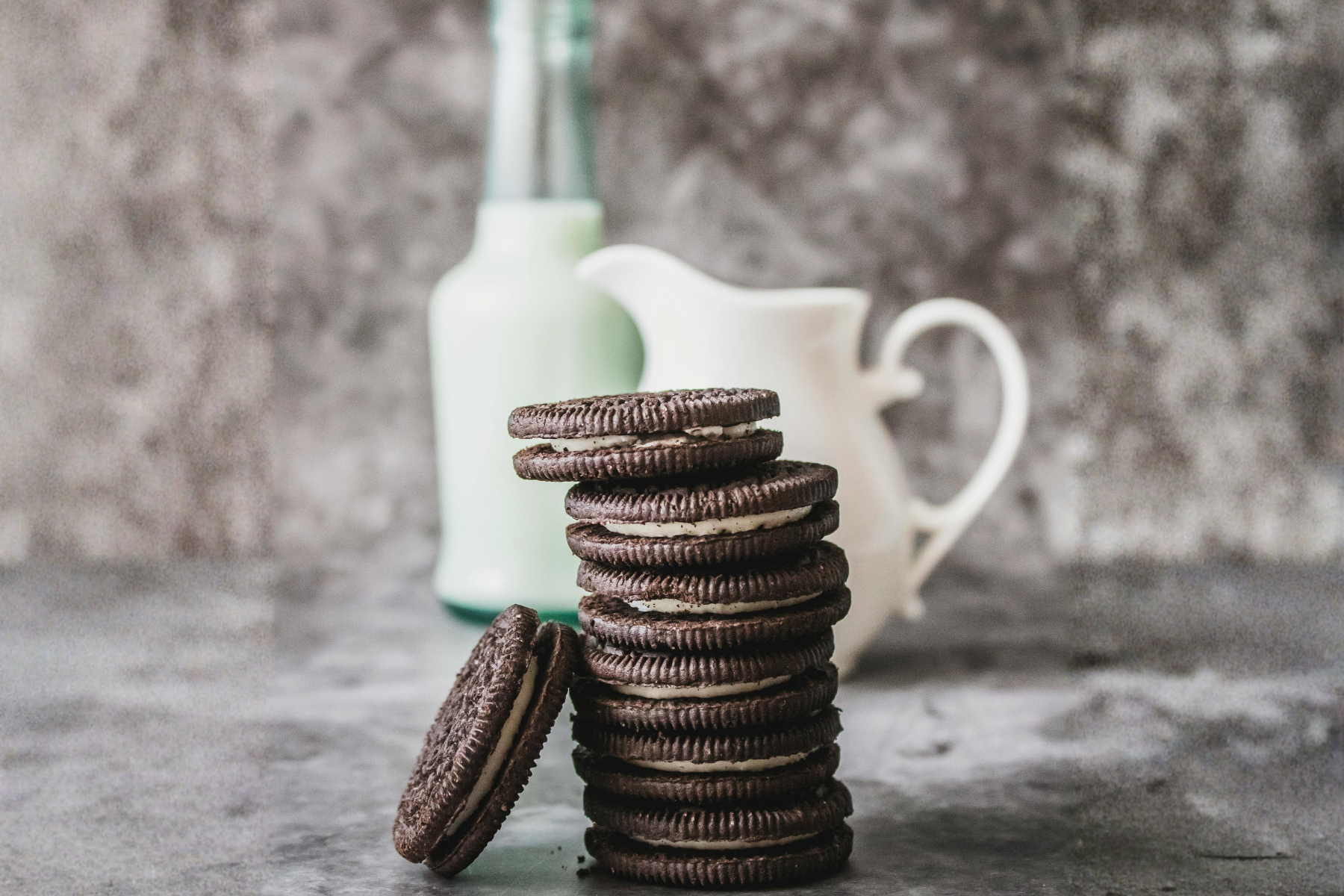
If you've spent any time on social media lately, you've probably seen the viral “Oreogate” story.
The story is about a mom who asked other parents not to send Oreos and other sweets to school because her daughter wasn't allowed to have them.
By now, there's another layer to the story. The creator has said the series is part of a paid partnership with Suno, an AI music company. We don't know how much of the story actually happened, how much was created for the series, or whether we're watching a fictional story made for social media.
And honestly, I don't think that matters much for the conversation I want to have.
Whether the story is completely real, partly real, or a very clever piece of advertising, it brought up something I hear about all the time:
Food anxiety.

I hear people talk about being anxious about what they're eating.
They're worried they're eating too much.
They're worried they're not eating enough.
They're worried about carbs, sugar, fat, calories, processed foods, seed oils, portion sizes, and whether something is “healthy enough.”
Sometimes they're worried because they don't trust themselves around certain foods.
Sometimes they feel guilty after eating something they had decided they weren't “supposed” to eat.
And sometimes they're just tired of thinking about food all the time.
Food anxiety can look different for everyone. It doesn't automatically mean someone has an eating disorder or a clinical anxiety disorder.
Sometimes it's simply that food has started to take up way too much space in your head.
And I think that's worth talking about.
Because food rules can be a big part of this.
Adults create food rules for ourselves all the time.
“I can't have bread.”
“I shouldn't eat after 7.”
“I need to earn dessert.”
“I can't keep chips in the house because I'll eat the whole bag.”
“I was good all day, so I deserve this.”
“I ate pizza, so I might as well start over tomorrow.”
Sound familiar?
These are food rules.
And food rules aren't automatically bad. Structure around food can be helpful and necessary.
But when rules become rigid, they can also create more guilt, fear, and preoccupation around food.
A cookie stops being just a cookie. It becomes THE COOKIE I'M NOT ALLOWED TO HAVE.
And that's where I think the Oreo story gets interesting.
Not because we need to decide whether Oreos are “good” or “bad.”
Not because kids should have unlimited access to cookies.
And not because everyone needs to follow the Intuitive Eating framework.
Instead, I want to use this story as a starting point to talk about food rules, restriction, food anxiety, and what happens when we stop trusting ourselves around food.
Because those conversations matter whether we're talking about a five-year-old who wants the cookie their friend brought to school or an adult who has spent the last 20+ years trying to figure out whether they can “trust themselves” around Oreos.
Let's talk about the Food Police
One idea from the Intuitive Eating framework that I find really useful is the idea of food voices.
Intuitive Eating was created by dietitians Evelyn Tribole and Elyse Resch. The framework includes 10 principles that are meant to help people develop a healthier relationship with food and their bodies.
I don't coach everyone using Intuitive Eating, but several of its concepts have influenced how I think about food and coaching.
One of those is the Food Police.
You probably know this voice.
It's the one that says:
“I shouldn't be eating this.”
“That's a bad food.”
“I've been good today.”
“I need to work this off.”
“I can't trust myself around that.”
“I'll start over tomorrow.”
The Food Police is basically all those food rules and judgments we've picked up over the years.
Sometimes they come from diets & diet culture.
Sometimes from social media.
Sometimes from family.
Sometimes from fitness culture.
Sometimes frome wellness culture.
And sometimes from well-meaning people passing along nutrition information they believed to be true.
The problem isn't that we have nutrition information.
The problem is when that information turns into a list of rules that makes us afraid to eat.
The Nutrition Informant and the Diet Rebel
There's another voice that can be harder to recognize: the Nutrition Informant.
It sounds like nutrition advice:
“This has too much fat.”
“That has too many carbs.”
“That food isn't healthy.”
“You shouldn't eat that because it has sugar.”
The information itself may not be wrong.
A food can be high in fat. A food can contain a lot of carbohydrate. A food can be low in fiber.
Those are facts.
But facts don't automatically tell us what we should do.
Nutrition information is useful when it helps us make informed decisions. It becomes less useful when every piece of information turns into another reason to feel guilty or anxious about eating.
I don't want people to stop caring about nutrition.
I want people to be able to use nutrition information without being controlled by it.
Then there's the Diet Rebel.
If the Food Police says:
“You can't have that.”
The Diet Rebel says:
“Watch me.”
You follow your rules all day. Then you're hungry, tired, stressed, or simply want the food you've been avoiding.
You eat it.
And suddenly the thought is:
“Well, I've already blown it.”
So you keep going.
“I'm starting over Monday anyway.”
This can look like a lack of control.
But sometimes it's a response to feeling controlled for too long.
That doesn't mean restriction automatically causes overeating or binge eating. Eating behavior is much more complicated than that.
But it does help explain why rigid food rules can sometimes make our relationship with food more difficult.
So what happens when a food becomes forbidden?
Think about a food you really wanted when you were told you couldn't have it.
Maybe it was candy.
Maybe cereal, chips, soda, pizza, or dessert.
Maybe you didn't even care that much about the food before.
But once someone told you that you couldn't have it?
Suddenly, you really wanted it.
This is one of the ideas behind the Intuitive Eating principle Make Peace with Food.
Research in children has found associations between restrictive feeding practices and greater interest in or eating of restricted foods. Some research has also linked parental restriction with eating in the absence of hunger.
But we need to be careful here.
These studies don't prove that restricting a food causes a child to overeat or develop an eating disorder. Parents may also restrict foods because their child already wants them more.
Eating behavior is complicated.
So I'm not interested in using this research to scare parents into thinking:
“If I don't let my kid eat Oreos, they're going to binge on them.”
That's not what the evidence says.
What it does tell us is that how we handle food restriction is worth thinking about.
What about kids?
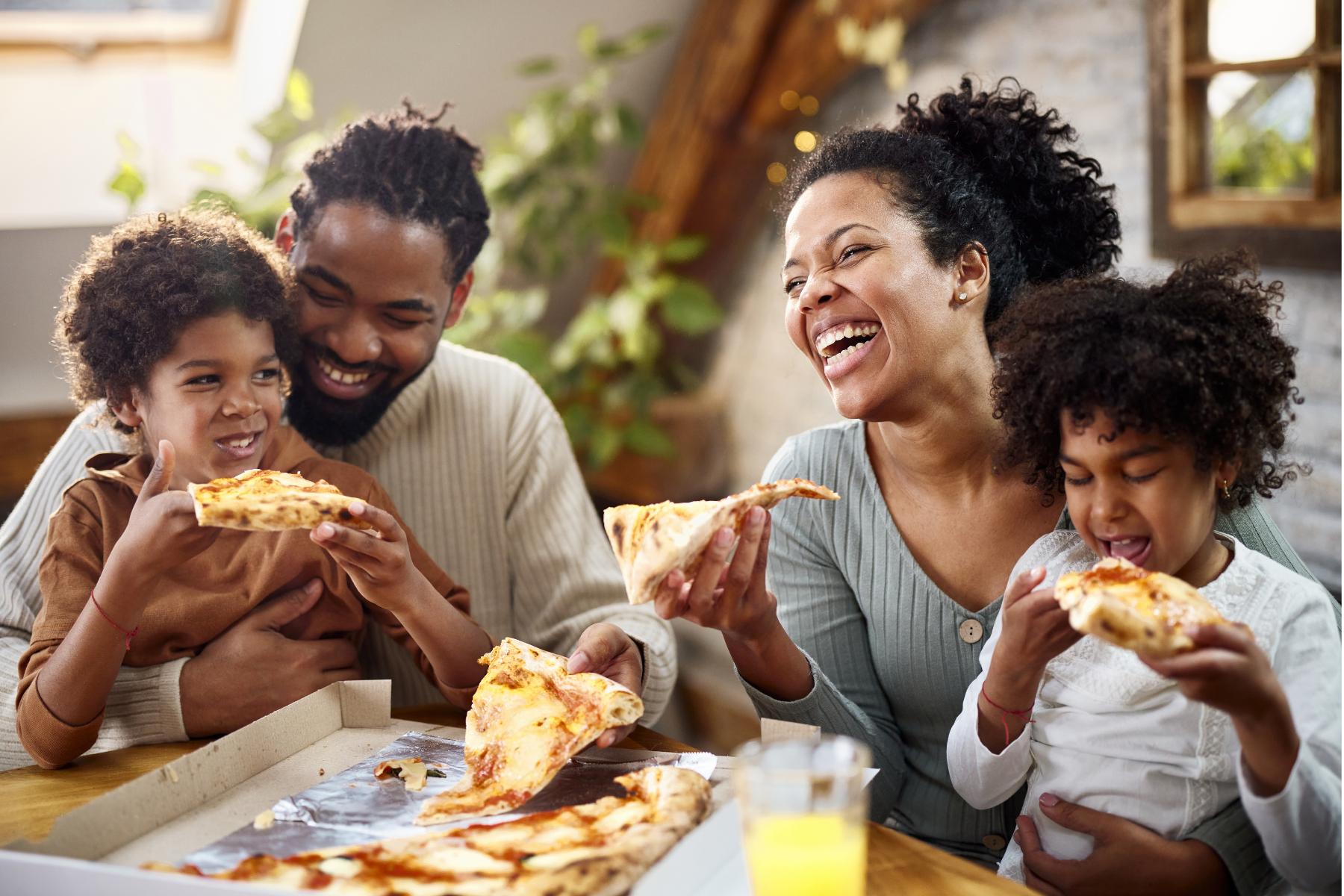
This is probably the part of the Oreo story that has made a lot of parents think.
I'm a parent of older young adults, so I've had the chance to watch my kids grow up and develop their own relationships with food.
And they watched mine change, too.
They saw me restrict.
They saw me label foods as “good” and “bad.”
They saw the rules I had around eating.
And they also watched me work through my own eating disorder and begin to build a different relationship with food.
That experience has stayed with me.
It has made me much more aware that kids don't just learn about food from what we tell them.
They watch us.
They see how we talk about our bodies.
They hear how we talk about food.
They see whether we feel guilty after eating.
They notice when Mom says she “was bad” over the weekend.
And they notice when certain foods are treated like they're dangerous or completely off-limits.
Now, I'm not saying parents should give their kids unlimited access to cookies, candy, or anything else.
Parents get to decide what foods they buy and serve. Families can have structure around food. Kids need adults to provide that structure.
There are also situations where limiting or avoiding certain foods is necessary for medical, safety, cultural, financial, or practical reasons.
That's different from saying:
“This food is bad, and you can't be trusted around it.”

There's a difference between:
“We're not having dessert tonight.”
and:
“Dessert is bad for you.”
There's a difference between setting a boundary and creating fear.
We don't have to get this perfect.
We can change how we talk about food.
We can let our kids see us make mistakes.
And we can remember that feeding children isn't about creating a perfect relationship with food.
It's about giving them opportunities to develop one.
“But if I keep it in the house, I'll eat the whole thing.”
I hear this one from adults all the time.
And sometimes, keeping a particular food out of the house is simply a choice that works for you.
Maybe you don't like it.
Maybe you don't want to spend money on it.
Maybe you have a medical reason to avoid it.
Maybe it doesn't fit well with how you want to structure your meals.
That's completely different from:
“I can't have that food because I have no control around it.”
That second statement is worth exploring.
Not because you should immediately run out and buy the food.
But because it might tell us something about the relationship you have with it.
Try asking yourself:
“Am I choosing not to keep this food around because that works for me, or because I'm afraid of what will happen if I do?”
Those are very different reasons.
What about habituation?
You may have heard the idea that if you eat a food often enough, you'll eventually get tired of it.
That's the basic idea behind habituation.
Repeated exposure has been studied quite a bit in children, especially when it comes to foods they initially don't like. There is evidence that repeated exposure can help increase acceptance of foods such as vegetables and fruits.
But that doesn't mean:
“Give your kid Oreos every day and they'll eventually get bored of them.”
We don't have evidence to make that promise.
What I do think is useful to consider is the difference between familiarity and scarcity.
When something is treated like a rare opportunity, it can feel more urgent.
When something isn't treated as forbidden, it may not carry the same emotional weight.
That doesn't mean everyone will respond the same way.
It simply gives us another way to think about why some foods can become so mentally loud.
So, what food voice is running the show?
Think about a food that brings up a lot of thoughts or rules for you.
Maybe it's chocolate, bread, pizza, chips, ice cream, or something completely different.
Now ask:
What is the voice saying?
Is it the Diet Rebel?
“Fine. I'll eat all of it.”
Then try getting curious instead of immediately reacting.
Maybe you're hungry.
Maybe you're tired.
Maybe you really want the food.
Maybe you've been thinking about it all day because you've been telling yourself you can't have it.
Maybe you aren't hungry, but you still want it because it sounds good.
None of those answers makes you a bad person.
They're just information.
The goal isn't to find the “right” answer.
The goal is to create a little more space between the thought and the action.
Intuitive Eating is a tool, not a requirement
This is an important part of the conversation for me.
I value many of the ideas in Intuitive Eating, and they have influenced how I think about food and coaching.
But I don't believe everyone has to practice Intuitive Eating in exactly the same way.
And I don't believe everyone has the same capacity to rely on internal cues.
Sometimes hunger and fullness cues aren't easy to recognize.
Stress, medications, health conditions, neurodivergence, trauma, food insecurity, and other factors can affect the way we experience or respond to those cues.
Sometimes someone needs more structure.
Maybe you need regular meals because you tend to forget to eat.
Maybe you need planned snacks because your schedule is unpredictable.
Maybe you have a health condition that requires specific nutrition recommendations.
Maybe you're working with a registered dietitian and have a structured nutrition plan.
Structure isn't failure.
Needing structure doesn't mean you aren't “intuitive enough.”
For some people, the most supportive approach may be a combination of structure and flexibility.
That's okay.
We can care about nutrition without living in fear of food

Moving away from rigid food rules doesn't mean we stop caring about nutrition.
I still care about protein.
I still care about fiber.
I still care about fruits and vegetables.
I care about cardiovascular health, blood glucose, energy, strength, performance, and overall diet quality.
Nutrition matters.
But nutrition doesn't have to become a moral code.
You can know that vegetables provide fiber and micronutrients and still enjoy a cookie.
You can care about protein and still eat pizza.
You can care about your health and still eat foods that aren't especially nutrient-dense.
One food doesn't have to cancel out another.
And you don't have to “make up” for eating something you enjoyed.
That's where Gentle Nutrition, the tenth principle of Intuitive Eating, can be useful.
It's about bringing nutrition information into the picture without letting it become another rigid set of rules.
How this has changed my coaching
This is also where this conversation gets personal for me.
When I started coaching, I was already drawn to the Intuitive Eating framework. I understood the problems with rigid dieting, food rules, and moralizing food, and those ideas were an important part of how I approached my work.
But I've changed, too.
I've continued to learn.
I've continued to work with different people.
And my own relationship with food has changed.
As my relationship with food has changed, my coaching has changed with it.
Not because I suddenly decided everything I believed before was wrong.
And not because I've moved from one extreme to another.
I've simply developed a bigger toolbox.
Today, I draw from evidence-based nutrition, behavior change strategies, Intuitive Eating concepts, and individualized coaching.
What we work on depends on the person.
For one person, we might talk about food rules and the Food Police.
For someone else, the biggest issue might be skipping meals and ending up ravenous at night.
Someone else may need help figuring out how to eat enough protein and fiber.
Someone may need more structure.
Someone may need more flexibility.
Someone may need help separating useful nutrition information from fear-based rules.
And sometimes the right answer is that someone needs support from another qualified professional.
There isn't one right way to eat.
There's also not one right way to coach.
The more I've learned, the more I believe that good coaching means paying attention to the person in front of me instead of trying to fit everyone into the same framework.
That's a big part of how my coaching has evolved.
My goal isn't to get everyone to eat intuitively.
My goal is to help people build eating habits that support their health, goals, and actual lives.
Sometimes that means challenging a food rule.
Sometimes it means learning more about nutrition.
Sometimes it means creating more structure.
Sometimes it means creating more flexibility.
And sometimes it means recognizing that food has become so stressful that it's time for additional support.
I'm still learning, too.
I expect my coaching will continue to evolve as I do.
I think that's a good thing.
We should be willing to change our minds when we learn something new.
So, what can Oreos actually teach us?
Maybe it's not really about Oreos at all.
Maybe it's about what happens when food starts carrying more meaning than it needs to.
When a cookie becomes a test of willpower.
When dessert becomes something we have to earn.
When eating pizza means we've “blown it.”
When a child learns that a certain food is forbidden.
When an adult starts wondering whether they can trust themselves around food.
When nutrition information becomes a source of fear instead of a useful tool.
And when we're so focused on following the rules that we've forgotten how to actually live with food.
The answer isn't to throw out all structure.
It isn't to stop caring about nutrition.
It isn't to give everyone the same approach.
And it isn't to blame parents for every food behavior their children develop.
It's about finding a better balance.
We can have structure without shame.
We can care about nutrition without moralizing food.
We can set boundaries without making food scary.
We can learn to recognize the voices in our heads without automatically believing them.
And we can build a relationship with food that leaves room for both health and enjoyment.
So the next time you hear yourself say:
“I can't be trusted around that food.”
Pause for a second.
Ask yourself:
“Is this actually true, or is this a rule I've learned?”
And then ask:
“What would it look like to give myself a little more choice?”
You don't have to figure it all out at once.
Sometimes the first step is simply noticing the voice.
Because the goal isn't perfect eating.
The goal is having more choices and fewer rules running the show.
Sources & Further Reading
I included these sources for anyone who wants to dig deeper into the research and the Intuitive Eating framework behind some of the ideas discussed here.
Tribole, E., & Resch, E. Intuitive Eating: A Revolutionary Anti-Diet Approach.
Fisher, J. O., & Birch, L. L. (1999). Restricting access to palatable foods affects children's behavioral response, food selection, and intake. The American Journal of Clinical Nutrition, 69(6), 1264–1272. https://doi.org/10.1093/ajcn/69.6.1264
Fisher, J. O., & Birch, L. L. (2002). Eating in the absence of hunger and overweight in girls from 5 to 7 years of age. The American Journal of Clinical Nutrition, 76(1), 226–231. https://doi.org/10.1093/ajcn/76.1.226
Birch, L. L., Fisher, J. O., & Davison, K. K. (2003). Learning to overeat: Maternal use of restrictive feeding practices promotes girls' eating in the absence of hunger. The American Journal of Clinical Nutrition, 78(2), 215–220. https://doi.org/10.1093/ajcn/78.2.215
Spill, M. K., et al. (2019). Repeated Exposure to Foods and Early Food Acceptance: A Systematic Review. USDA Nutrition Evidence Systematic Review. https://doi.org/10.52570/NESR.PB242018.SR0401
Costa, A., & Oliveira, A. (2023). Parental feeding practices and children's eating behaviours: An overview of their complex relationship. Healthcare, 11(3), 400. https://doi.org/10.3390/healthcare11030400